Discoveries
Find a story by subject, object, or question.
All discoveries
21 stories-
Materials & Manufacturing
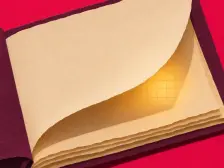
Who put a grid in the endpapers of a 1624 book about ciphers?
A blank leaf in a book of secret writing has squares hiding in it. Change the light and see if you can tell who put them there.
-
Maps & Navigation
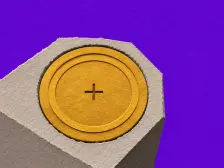
What did a surveyor leave at the spot marked “BM”?
Two little crosses sit beside the same Kentucky railroad. A survey crew’s note about a gravel lane will tell you which one held its disk.
-
Wildlife & Ecology
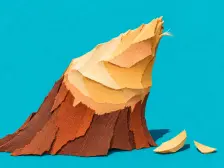
Why does a beaver leave a stump shaped like a pencil?
A yellow birch in Michigan was collected halfway through the job. Its narrow waist and a loose wood chip let you read what the teeth did.
-
Wildlife & Ecology
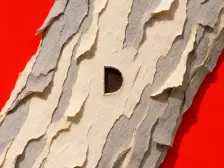
What came out of a D-shaped hole in an ash tree?
Two insects left doors in ash bark. One opening is twice as wide as the other. Read the ruler, pick the beetle’s exit, then check your eye against a penny.
-
Wildlife & Ecology
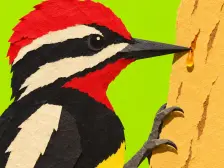
Why would a woodpecker drill its holes in rows?
On May 19, two holes in a Michigan tree held sap. By May 20, both were dry. Take a look at the bird’s next move and decide where you’d watch tomorrow.
-
Wildlife & Ecology
Who left those marks on the tree?
A trunk ruled in little holes, a tiny D in ash bark, and a birch whittled almost through. Take a close look at each, then pick who you think made it.
-

Maps & Navigation
Is that brown loop a hill or a hole?
Two brown lines curl back on themselves on a map of Park City, Kentucky. Set a foot inside each one. Which way would the ground go?
-
Maps & Navigation
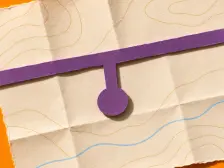
Why did the mapmaker draw the new streets in purple?
South Buckingham Court comes to a round little end above a Virginia creek. Switch between two maps of the same bend and see what the mapmaker added.
-
Maps & Navigation
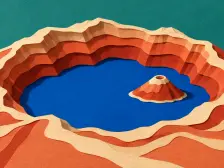
How do you read a landscape from a flat map?
On an old map of Crater Lake, a line can take you up a mountain and a number can drop you through the water. Start with one finger on the shore.
-
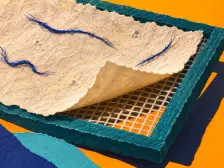
Materials & Manufacturing
What can you read on a blank sheet of paper?
Before a Philadelphia printer could turn a sheet into money, a Pennsylvania mill had already put two clues into it. One was blue. The other caught the light.